Every machine on your LAN, one browser tab.
LANHub is a private, self-hosted file explorer that replaces unreliable SMB shares. Register each computer you own, and browse, move, copy, and search across all of them — from any browser, with drag-and-drop between machines.
Every machine, at a glance
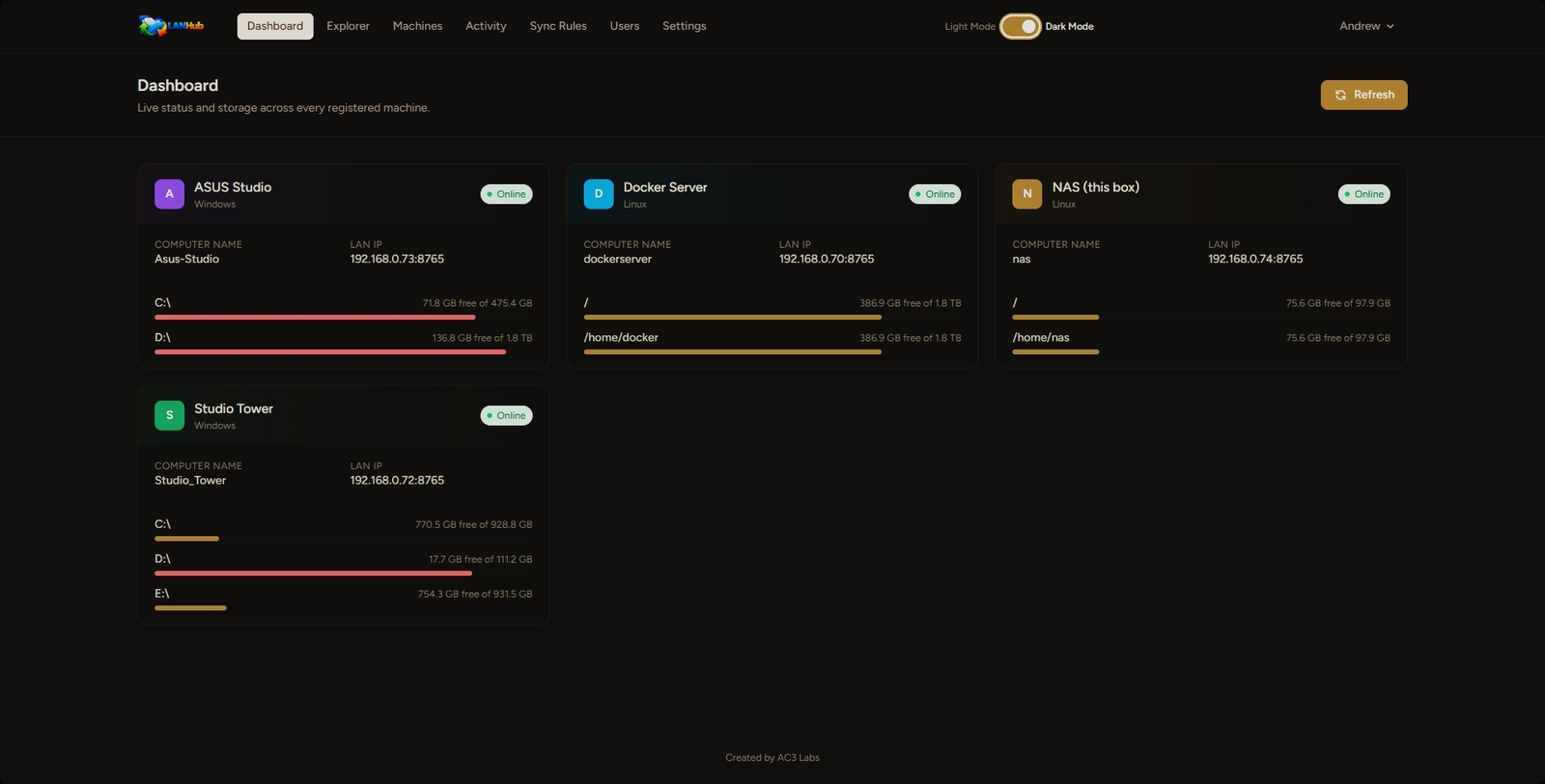
The moment LANHub loads, you know exactly where things stand — which machines are online, and how much room is left on every drive they have.
- Live online/offline status per machine
- Free vs. total space on every drive, per machine
- Color-coded machine tags, set once and used everywhere
Browse them all side by side
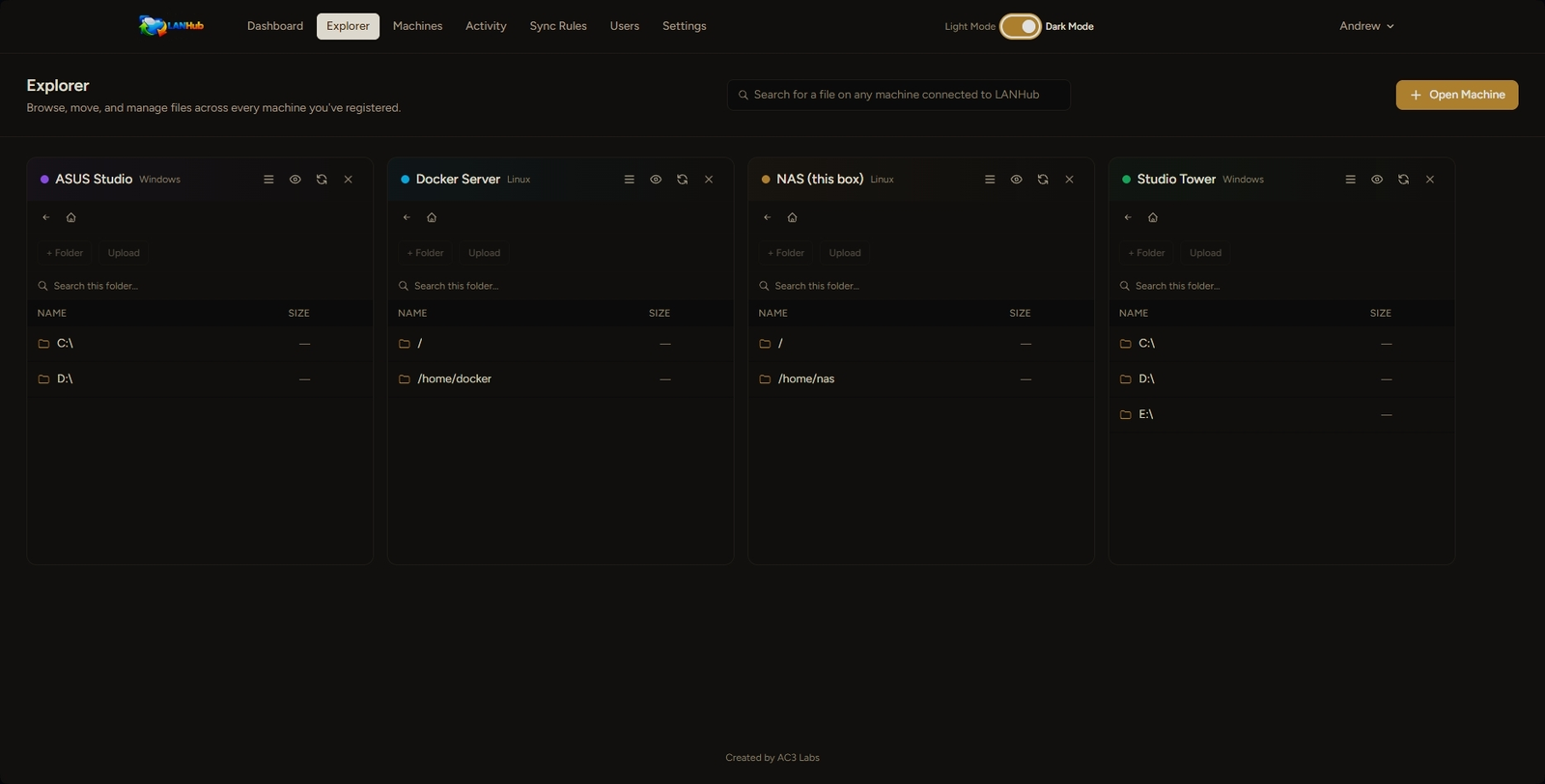
Open any registered machine into its own pane and work across all of them at once. Drag a file from one pane to another to copy it — hold Ctrl to move it instead.
Can't remember which machine a file is on? The search bar at the top checks every machine you have access to and tells you.
- Unlimited open panes, one per machine or several on the same one
- Drag-and-drop copy/move, same-machine or cross-machine
- Search a single folder, or every machine on the network
Register once, manage forever
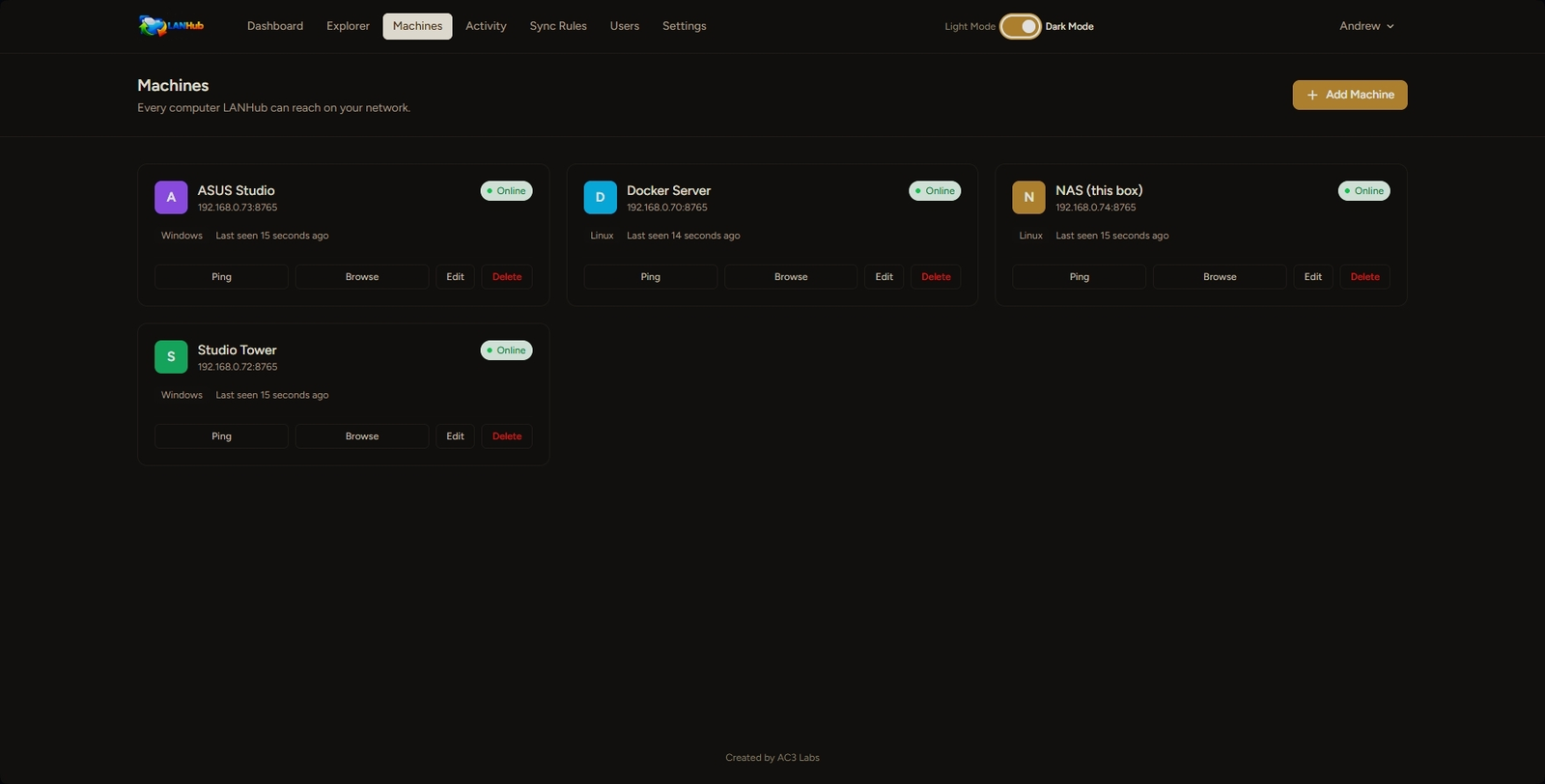
Adding a computer takes one click to generate a token, then a short install on that machine. From here, every registered machine can be pinged, browsed, edited, or retired.
- One-click health check per machine
- LAN IP, OS, and last-seen heartbeat at a glance
- Edit or delete a machine without touching its agent
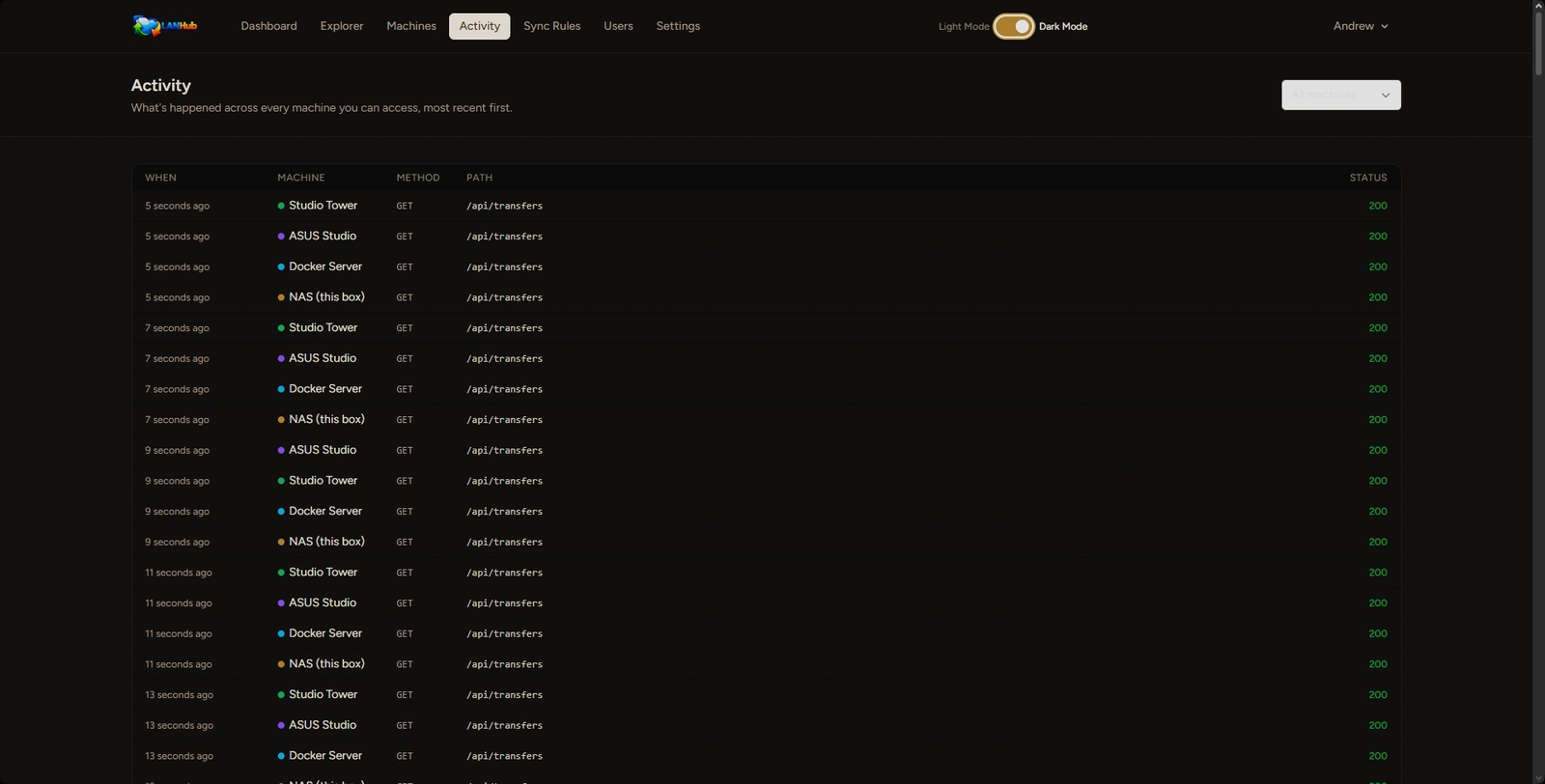
A live audit trail
Every request any machine's agent handles shows up here in real time — which machine, what method, which path, and whether it succeeded. Useful for confirming a sync ran, or catching a machine that's behaving oddly.
- Filterable by machine
- Color-coded to match each machine's tag
- HTTP status visible at a glance
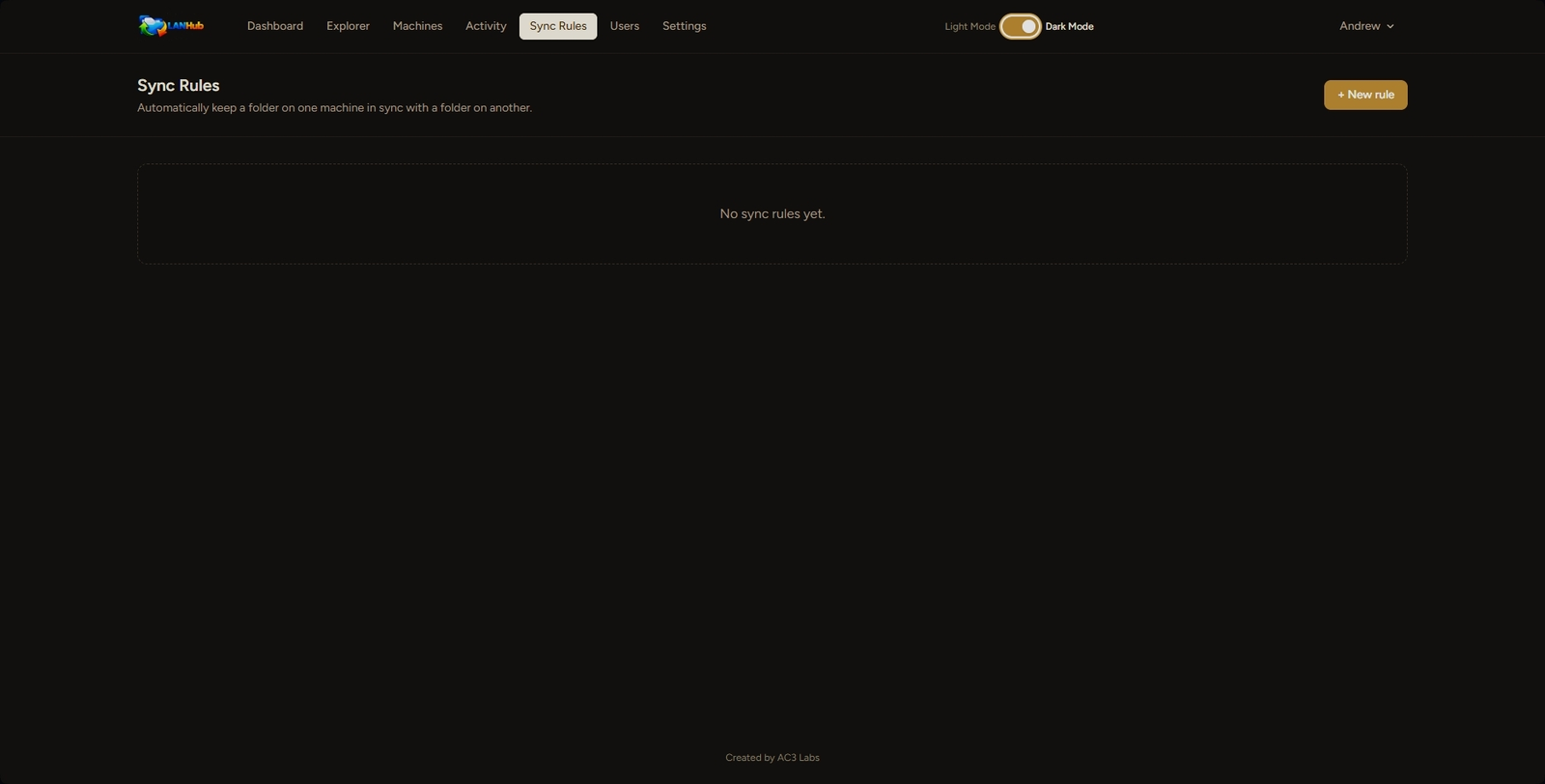
Set it and forget it
Keep a folder on one machine automatically mirrored to another — one-way or two-way, on a schedule you set. If a file changed on both ends since the last sync, LANHub flags the conflict instead of silently picking a winner.
- One-way or mirrored sync between any two machines
- Runs on a schedule, no manual trigger needed
- Conflict detection before anything gets overwritten